


AI Agents Course: Best Training Programs in 2026

Quick Summary: AI agents courses teach how to build autonomous software systems that can reason, plan, and execute tasks with minimal human intervention. Top programs from Stanford, MIT, Berkeley, and platforms like Coursera and Microsoft Learn cover frameworks, agentic design patterns, and real-world implementation using Python and tools like LangGraph.
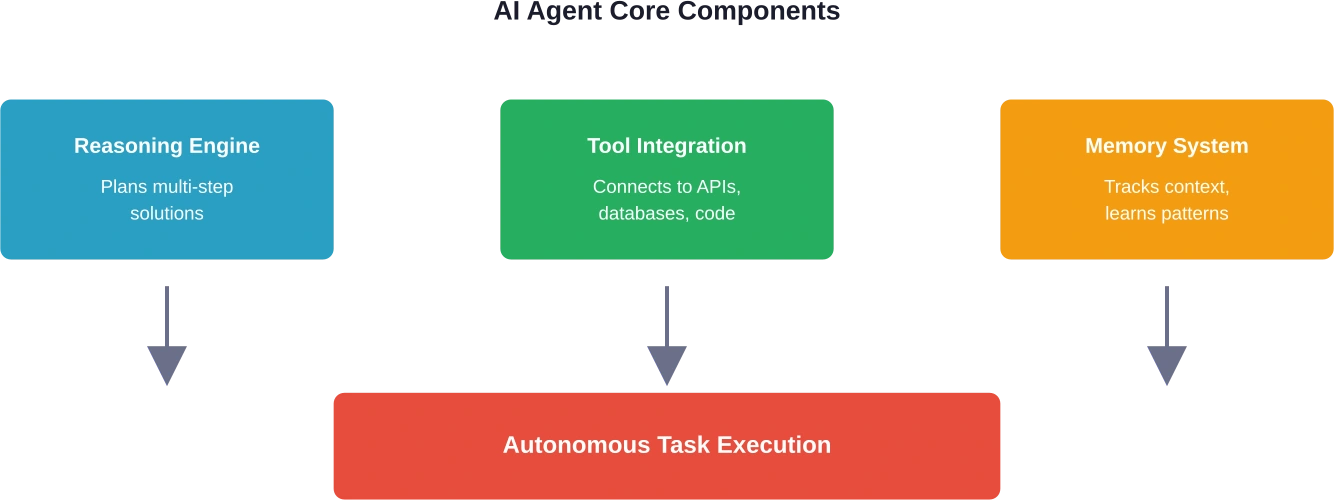
The shift from static AI models to autonomous agents represents one of the most significant developments in artificial intelligence. Unlike traditional systems that simply respond to prompts, AI agents can plan multi-step workflows, use tools dynamically, and adapt based on environmental feedback.
Organizations now recognize that agentic AI could add trillions in economic value. According to McKinsey, generative AI alone could add up to $4.4 trillion annually to the global economy, and agents multiply that potential by handling complex, multi-step tasks independently.
But how do professionals acquire these skills? The landscape of AI agents courses has expanded dramatically, from university programs to industry certifications.
What Makes AI Agents Different
Traditional language models generate text based on inputs. Agents go further—they reason about goals, break problems into subtasks, select appropriate tools, and iterate based on results.
Anthropic's engineering team describes agents as systems that use LLMs to handle complex, multi-step tasks through iterative processing. OpenAI's practical guide emphasizes three core capabilities: reasoning about the current state, planning sequences of actions, and executing those actions through tool use.
Here's the thing though—building effective agents isn't about complex frameworks. The most successful implementations use simple, composable patterns rather than specialized libraries.
University Programs Leading the Field
Academic institutions have launched specialized courses focused on agentic systems. These programs emphasize research-backed approaches and cutting-edge techniques.
Stanford CS329A: Self-Improving AI Agents
Stanford's course covers techniques for AI agents that continuously improve through environmental interaction. The curriculum addresses constitutional AI, verifier-based improvement, scaling test-time compute, and combining search with language models.
The program includes an original research project and discussions with academic and industry speakers. Non-degree students may also have up to $200 of additional expenses associated with compute requirements.
Berkeley CS294/194-196: Agentic AI
Berkeley's fall 2025 offering explores agentic frameworks and design patterns. The grading structure varies by enrollment level—students taking it for 3-4 units focus more heavily on participation and projects compared to those enrolled for single-unit credit.
MIT Applied Agentic AI for Organizational Transformation
MIT's professional education program runs eight weeks and costs $3,200. Course starts: May 12, 2026. Participants earn 6.4 continuing education units upon completion.
The program emphasizes practical transformation—how enterprises can deploy agents to compete and innovate effectively.
Professional Certifications and Specializations
Industry platforms offer structured learning paths for developers and business professionals.
Coursera AI Agent Developer Specialization
Offered by Vanderbilt University, this specialization teaches design, building, and refinement of intelligent software agents. The curriculum covers Python, generative AI, and agentic architectures for real-world applications.
Learners complete hands-on projects building functional agents to solve practical problems across industries. Dr. Jules White serves as the lead instructor.
Microsoft AI Agents for Beginners
Microsoft's 10-lesson course takes learners from concept to code, covering fundamentals of building AI agents. The open-source curriculum includes text, code samples, and video content.
Lessons progress through agent use cases, agentic frameworks, design patterns, and implementation strategies. The course is available in over 40 languages through automated translation.
Salesforce AI Agent Training
Salesforce provides free online training through Trailhead focused on building, optimizing, and deploying intelligent workflows. The curriculum emphasizes how agents automate tasks, make decisions, and interact with data to enhance efficiency.
Content addresses both technical implementation and organizational productivity gains.
|
Program |
Provider |
Duration |
Cost |
Focus Area |
|---|---|---|---|---|
|
CS329A |
Stanford |
Quarter |
Tuition + ~$200 |
Self-improving systems |
|
Agentic AI |
Berkeley |
Semester |
Tuition |
Frameworks & design |
|
Organizational AI |
MIT |
8 weeks |
$3,200 |
Enterprise transformation |
|
Agent Developer |
Coursera |
Self-paced |
Subscription |
Python development |
|
Agents for Beginners |
Microsoft |
Self-paced |
Free |
Fundamentals |
Key Skills Taught in Agent Courses
Quality programs emphasize practical capabilities over theoretical knowledge alone.
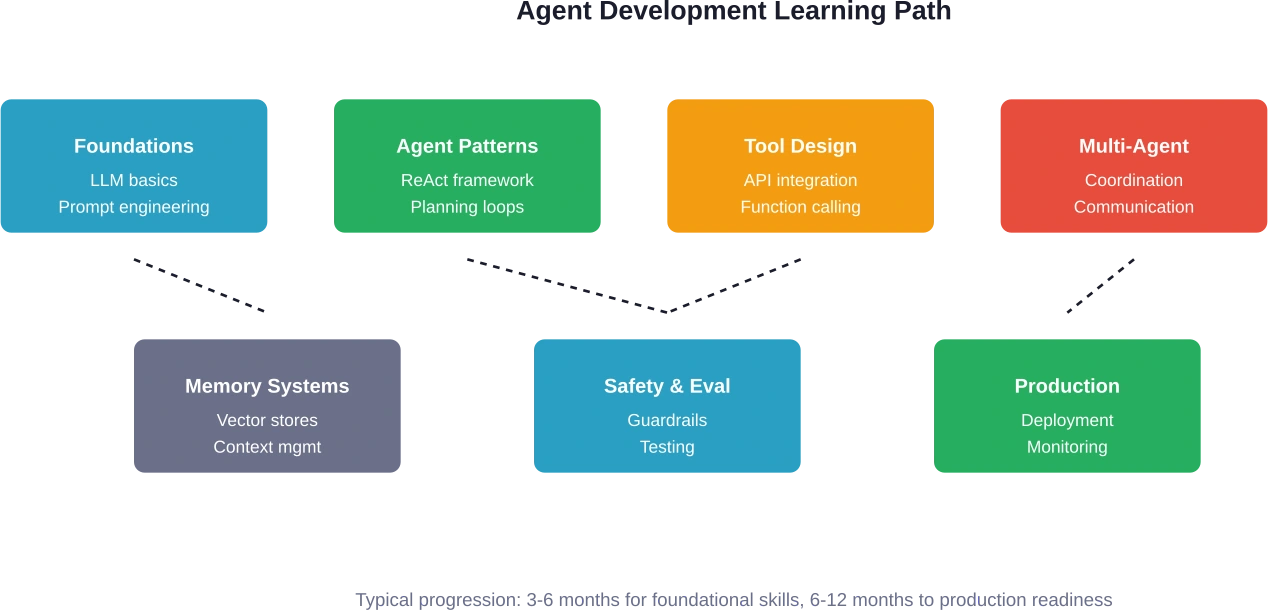
Most courses cover framework selection—particularly LangGraph, which has emerged as a standard for building stateful agent systems. DeepLearning.AI offers a dedicated course on AI agents in LangGraph, teaching multi-agent architectures and complex workflow orchestration.
Context engineering represents another critical skill. As Anthropic explains, context is a finite resource for agents. Effective courses teach strategies for curating and managing context, including techniques where main agents coordinate with subagents that perform deep technical work.
Real talk: tool integration matters more than many beginners expect. Agents need robust connections to APIs, databases, search systems, and code execution environments. Programs that include hands-on tool design produce more capable developers.
Government and Standards Initiatives
The National Institute of Standards and Technology launched the AI Agent Standards Initiative in February 2026. This effort ensures the next generation of AI can function securely on behalf of users and interoperate smoothly across digital ecosystems.
NIST issued a Request for Information in January 2026 about securing AI agent systems, recognizing that agents require different security frameworks than static models. The Center for AI Standards and Innovation coordinates this work.
These standards will shape how agent courses address security, authentication, and interoperability topics.
Choosing the Right Course
Several factors determine which program fits specific needs.
Career stage matters. Beginners benefit from structured introductions like Microsoft's free course. Experienced developers might prefer Stanford's research-focused approach or specialized topics like LangGraph.
Budget considerations vary dramatically—from free resources to MIT's $3,200 professional program. Check official websites for current pricing, as costs change.
Time commitment differs too. Self-paced online courses offer flexibility, while university programs follow academic calendars with firm deadlines.
Look for hands-on projects. Community discussions suggest the most valuable courses include building actual agents, not just watching lectures. Vanderbilt's specialization explicitly includes applied learning projects across multiple industries.
Turn AI Agent Skills Into Working Systems
Understanding how AI agents work is one thing, making them useful in real systems is another. OSKI Solutions helps teams move from learning AI agents to actually using them inside real products and workflows. They build and integrate AI-driven features into existing systems like ERP, CRM, and custom web platforms, with a strong focus on .NET and Node.js environments. That includes API integrations, automation of internal processes, and adding AI layers without breaking current architecture.
The benefit is straightforward – instead of rebuilding everything, they work around what’s already in place. This makes it easier to modernize legacy systems, connect AI to business-critical tools, and scale gradually. Their typical projects sit in the range where companies need something stable and long-term, not experimental, with clear ownership and ongoing support.
If you want AI agents to do actual work inside your systems, contact OSKI Solutions and walk through your setup.
Learn to Build AI Agents
Master the fundamentals of AI agents—from basic concepts to building real-world autonomous systems.
Frequently Asked Questions
What programming language do AI agents courses teach?
Most courses focus on Python because of its strong ecosystem for AI development, including libraries and frameworks like LangGraph, LlamaIndex, and major LLM APIs.
Do you need machine learning experience to take an AI agents course?
Not always. Many beginner courses require no prior ML knowledge, while advanced programs may expect familiarity with machine learning fundamentals. Always check prerequisites.
How long does it take to learn AI agent development?
Basic skills typically take 3–6 months to develop. Achieving production-level expertise can take 6–12 months with hands-on practice and real-world projects.
What's the difference between prompt engineering and agent development?
Prompt engineering focuses on optimizing single interactions with language models. Agent development involves building systems that combine multiple steps, tools, memory, and planning to complete tasks autonomously.
Are there free AI agents courses available?
Yes. Many organizations offer free courses covering fundamentals, while paid programs often provide deeper knowledge, structured learning, and certifications.
What frameworks do professional courses teach?
Courses often teach frameworks like LangGraph and general agent design patterns. Some focus on framework-agnostic approaches that apply across different platforms.
Do AI agent courses offer certifications?
Yes. Many programs provide certificates, badges, or academic credit. The value depends on the institution and industry recognition.
The Path Forward
AI agents represent a fundamental shift in how software operates. Courses teaching these skills have moved from experimental offerings to structured programs at leading institutions.
The best approach combines theoretical foundations with hands-on building. Whether through free resources or formal university programs, focus on courses that emphasize real implementations over abstract concepts.
Start with foundations if agents are new territory. Explore specialized topics like multi-agent systems or production deployment once basics are solid. The field evolves rapidly—continuous learning matters as much as initial training.
Ready to build autonomous AI systems? Explore Stanford, MIT, or Berkeley programs for academic depth. Try Microsoft or Coursera offerings for flexible, practical skill-building. The tools and frameworks exist today. What matters now is learning to use them effectively.


