


Digital Transformation in Clinical Trials: 2026 Guide
Quick Summary: Digital transformation in clinical trials leverages digital health technologies (DHTs) to modernize research through remote monitoring, real-time data collection, and decentralized trial designs. The FDA actively seeks input on DHT use for drug development, with submissions open until June 1, 2026. These technologies improve patient recruitment, retention, and access while reducing costs and enhancing data quality, fundamentally reshaping how clinical research operates.
Clinical trials have long operated through paper-heavy, site-dependent models that limit patient access and slow data collection. But that's changing fast.
Digital transformation isn't just a buzzword—it's fundamentally reshaping how sponsors, sites, and regulatory bodies approach clinical research. From wearable devices that transmit real-time physiological data to decentralized trials that bring research to patients' homes, technology is solving long-standing challenges in trial design and execution.
The FDA has recognized this shift, actively soliciting input through its docket "Advancing the Use of Digital Health Technologies in Clinical Investigations for Drugs and Biological Products" with comments accepted until June 1, 2026. This regulatory engagement signals that digital health technologies (DHTs) are no longer experimental—they're becoming standard practice.
What Digital Transformation Actually Means for Clinical Trials
Digital transformation in clinical trials involves integrating digital health technologies into every phase of research—from recruitment and consent through data collection, monitoring, and analysis.
These technologies include wearable sensors, mobile health apps, electronic patient-reported outcomes (ePRO), remote monitoring devices, and artificial intelligence-driven analytics. The goal? Improve participant access and engagement, enhance trial-related measurements, enable efficient data transmission, and maintain rigorous quality standards.
Here's the thing though—this isn't just about adding a digital layer to traditional processes. It's about rethinking trial design from the ground up.

Build Clinical Trial Solutions With OSKI

OSKI builds custom software and AI integrations for teams that need reliable tools around data, workflows, and internal systems. Their work covers backend development, cloud setup, API integrations, frontend interfaces, DevOps, and AI-powered features.
For clinical trial teams, this can support participant data workflows, internal dashboards, document handling, reporting tools, or integrations between trial, research, and operational platforms.
Need Software Built Around Trial Workflows?
OSKI can help with:
developing custom web and internal tools
connecting research and data systems
adding AI and automation features
supporting deployment and maintenance
👉 Contact OSKI to discuss your project.
Digital Transformation in Clinical Trials
Accelerate clinical research with AI, automation, and digital platforms that improve patient recruitment, data accuracy, compliance, and trial efficiency.
The Push Toward Decentralized and Hybrid Trial Models
Decentralized clinical trials (DCTs) represent one of the most significant shifts in research methodology. Instead of requiring participants to visit physical sites for every assessment, DCTs leverage technology to conduct portions—or all—of the trial remotely.
This approach addresses persistent recruitment and retention challenges. Traditional site-based models exclude patients who live far from research centers, have mobility limitations, or can't accommodate frequent visits due to work or caregiving responsibilities.
The Clinical Trials Transformation Initiative (CTTI) has developed comprehensive recommendations for implementing digital health trials, recognizing that these models can dramatically expand participant access and diversity.
Hybrid models combine remote and in-person elements, allowing sponsors to tailor the approach to specific trial needs. Safety assessments might require site visits, while daily symptom tracking happens through mobile apps. Lab work could be conducted through local partnerships or home health visits rather than requiring travel to centralized facilities.
Real-World Applications Across Disease Areas
Remote monitoring programs are actively addressing diverse conditions. Home-based digital monitoring systems are now assessing ALS progression, capturing functional decline through sensors and patient-reported measures without requiring frequent clinic visits that burden patients with advanced disease.
Cancer research has seen substantial innovation. The UpSMART initiative demonstrates five years of digital innovation in oncology clinical research, while telehealth models now support cancer-related fatigue clinics for survivors who previously lacked accessible follow-up care.
Cardiovascular and metabolic studies are leveraging wearable devices and remote monitoring for heart failure patients, chronic disease management, and even gout progression tracking in primary care settings.
Recruitment, Retention, and Data Collection Advantages
Recruitment consistently ranks among the top challenges in clinical trials. Digital approaches expand reach through online advertising, patient community engagement, and electronic screening that identifies eligible participants faster.
But recruitment is only half the battle. Retention determines whether trials meet enrollment targets and generate valid conclusions. Digital technologies reduce participant burden by eliminating unnecessary site visits, sending automated reminders, and making data submission convenient.
Data quality improves through digital transformation as well. Electronic systems eliminate transcription errors, apply real-time validation rules, and flag anomalies immediately rather than months later during database lock.
Regulatory Considerations and Data Standards
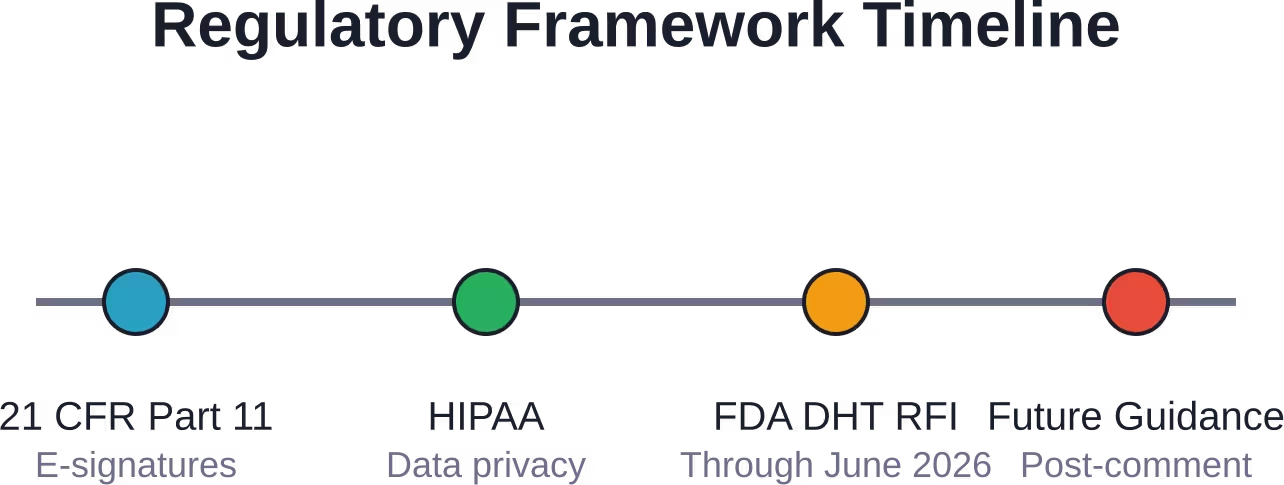
The FDA recognizes that DHTs offer substantial benefits for drug development while requiring careful consideration of data quality, privacy, and security standards.
Electronic signatures in clinical investigations fall under 21 CFR Part 11 regulations, which establish requirements for electronic records and signatures to be trustworthy and equivalent to paper records.
Privacy and data security take on added complexity when participants transmit health information from personal devices. Trials must comply with HIPAA regulations, implement encryption for data transmission, ensure secure cloud storage, and provide participants with clear information about data handling practices.
Challenges and Practical Implementation Considerations
Digital transformation is not without obstacles. Technology adoption requires upfront investment in platforms, training, validation, and support. Trial sites also need the right infrastructure to manage remote monitoring and troubleshoot participant technology issues.
Some of the most common challenges include:
Upfront investment in digital platforms, training, and validation
Site readiness for remote monitoring and digital trial workflows
Technical support for participants using apps, wearables, or connected devices
Digital access gaps among populations with limited internet, smartphones, or technical confidence
The need to provide devices when participants do not have suitable technology
User interfaces that must work for people with different comfort levels
Large volumes of continuous monitoring data from wearables and sensors
Strong data science infrastructure for storing, managing, and analyzing trial data
Clear rules for separating meaningful clinical signals from background noise
The goal is not simply to add more technology to clinical trials. Digital tools need to make participation easier, improve data quality, and reduce operational friction without creating new barriers for patients or sites.
Integration with Existing Clinical Trial Infrastructure
Most organizations aren't building digital trials from scratch—they're integrating new technologies into established systems and processes. Electronic data capture (EDC) systems need to interface with DHT platforms, wearable device APIs, and ePRO applications.
Staff training becomes critical. Site coordinators accustomed to paper source documents and in-person visits must learn digital platforms, remote consent procedures, and virtual monitoring techniques. Sponsors need data scientists who understand both clinical research and machine learning algorithms.
The CTTI provides resources and recommendations specifically addressing these implementation challenges, drawing on multi-stakeholder input from sponsors, sites, regulators, and patient advocates.
Artificial Intelligence and Machine Learning Applications
AI and machine learning algorithms are transforming how researchers analyze trial data. These technologies can identify patterns in large datasets that would be impossible to detect manually, predict patient outcomes, and flag safety signals earlier.
Recruitment optimization uses AI to match potential participants with appropriate trials based on electronic health record data, improving screening efficiency and reducing screen failures.
Real-time monitoring algorithms can detect protocol deviations, adherence issues, or safety concerns as they occur rather than during periodic data review meetings weeks later.
That said, regulatory guidance for AI in clinical trials continues to evolve. Algorithms used for decision-making or endpoint assessment require validation, and transparency about how AI influences trial conduct remains an active discussion area.
Cost Implications and Efficiency Gains
Digital transformation requires upfront investment but can reduce overall trial costs substantially. Site infrastructure requirements decrease when fewer visits occur. Data management becomes more efficient with automated collection and validation.
Enrollment timelines often compress because digital recruitment reaches broader populations and remote participation removes geographic barriers. Faster enrollment means shorter overall study duration and earlier potential product launch.
However, cost savings aren't automatic. Poor technology choices, inadequate training, or rushed implementation can create expensive problems. Successful digital transformation requires strategic planning, appropriate resource allocation, and realistic timelines.
The Patient Experience and Engagement Factor
Digital technologies fundamentally improve the participant experience when implemented thoughtfully. Reducing travel burden, offering flexible data collection windows, and providing feedback through apps all enhance engagement.
Patient-centricity isn't just a buzzword—it's a practical necessity. Trials designed without considering participant perspectives suffer poor retention regardless of technology deployment.
Digital tools enable bidirectional communication. Participants can ask questions through secure messaging, receive appointment reminders, access educational materials, and view their own data. This transparency and engagement contrasts sharply with traditional models where participants often feel like passive subjects rather than active partners.
Looking Forward: The Future of Clinical Research
Digital transformation will continue accelerating. Wearable technology becomes more sophisticated, capturing increasingly precise physiological measurements. AI capabilities expand, enabling more nuanced data analysis and predictive modeling.
Regulatory frameworks will evolve to address emerging technologies while maintaining safety and efficacy standards. The FDA's current request for information demonstrates regulatory commitment to understanding stakeholder needs and developing appropriate guidance.
Hybrid models will likely become the default rather than the exception, with fully site-based trials reserved for situations requiring intensive in-person monitoring or complex procedures.
The question isn't whether digital transformation will reshape clinical trials—it's how quickly organizations can adapt to leverage these capabilities effectively.
Frequently Asked Questions
What are digital health technologies in clinical trials?
Digital health technologies (DHTs) include wearable devices, mobile health apps, remote monitoring systems, electronic patient-reported outcomes, and telemedicine platforms used to collect data, monitor participants, or deliver interventions during clinical research. They enable remote participation and continuous data collection beyond traditional site visits.
Are decentralized clinical trials as reliable as traditional site-based studies?
When properly designed and implemented, decentralized trials can meet the same quality and regulatory standards as traditional trials. They must address data security, identity verification, and measurement consistency, but these challenges have established solutions. Regulatory bodies including the FDA actively support appropriate DHT use.
How does digital transformation improve patient recruitment?
Digital approaches expand geographic reach beyond immediate site vicinity, enable online screening and consent, reduce participation burden through remote options, and use targeted online outreach to reach specific populations. These factors collectively accelerate enrollment and improve diversity.
What privacy protections apply to digital clinical trial data?
Digital trial data must comply with HIPAA regulations, 21 CFR Part 11 requirements for electronic records, and institutional data security policies. This includes encryption for data transmission and storage, access controls, audit trails, and participant consent for specific data uses.
Do participants need their own devices for digital trials?
Not necessarily. Many trials provide devices to participants to ensure standardization and remove access barriers. When trials use participants' personal devices, sponsors typically provide technical support and ensure compatibility across different device types and operating systems.
How do sites adapt to digital trial models?
Sites need training on digital platforms, procedures for remote consent and monitoring, protocols for troubleshooting participant technology issues, and integration between digital tools and existing clinical trial management systems. Organizations like CTTI provide implementation resources.
What's the FDA's current stance on digital health technologies?
The FDA actively supports appropriate DHT use and is currently soliciting stakeholder input through June 1, 2026, on challenges and opportunities in using digital technologies for drug development. The agency recognizes DHTs' potential to improve trials while ensuring regulatory standards are maintained.
Conclusion
Digital transformation represents a fundamental shift in how clinical research operates, moving from paper-heavy, site-dependent models to flexible, technology-enabled approaches that improve access, efficiency, and data quality.
The technologies exist. Regulatory pathways are established and evolving to address emerging capabilities. Patient demand for convenient, less burdensome trial participation continues growing.
Organizations that strategically implement digital approaches—with appropriate planning, training, and patient-centric design—will gain competitive advantages in enrollment speed, data quality, and cost efficiency. Those that delay risk falling behind as digital trials become standard practice rather than innovation.
The FDA's open comment period through June 1, 2026, provides an opportunity for stakeholders to shape future guidance. Engaging with these regulatory discussions ensures that frameworks support innovation while maintaining the rigorous standards clinical research demands.


