

Digital Transformation in Oil and Gas: 2026 Guide

Quick Summary: Digital transformation in oil and gas leverages AI, IoT, cloud computing, and advanced analytics to optimize operations, reduce costs, and improve decision-making across upstream, midstream, and downstream activities. Industry leaders are seeing measurable returns through predictive maintenance, automated processes, and data-driven insights that augment human expertise rather than replace it.
The oil and gas sector has weathered countless storms over the past century. Price volatility, geopolitical shifts, environmental pressures—this industry knows resilience.
But the current transformation feels different. It's not just another cycle of boom and bust. Digital technologies are fundamentally reshaping how energy companies operate, from seismic surveys to downstream distribution.
According to the Journal of Petroleum Technology (published by SPE), AI is no longer experimental technology—it's a proven creator of economic value. The path forward isn't just about automation. It's about augmentation, where artificial intelligence amplifies human expertise rather than replaces it.
So what does this actually mean for operations on the ground?
What Digital Transformation Really Means for Oil and Gas
Digital transformation represents the strategic integration of advanced technologies across every facet of petroleum operations. This goes far beyond installing new software or upgrading hardware.
The International Energy Agency identifies digitalisation as a fundamental shift affecting how the world produces, transports, and consumes energy. From sensors in oil reservoirs to automated drilling systems, connectivity and data analytics are becoming central to competitive advantage.
Think of it this way: traditional operations relied on periodic inspections, scheduled maintenance, and reactive problem-solving. Digital operations use continuous monitoring, predictive analytics, and proactive optimization.
The difference? One approach waits for problems. The other prevents them.
Here's the thing though—successful transformation requires more than technology adoption. Companies must address cultural resistance, workforce skill gaps, and organizational inertia that can derail even the best-funded initiatives.
Core Technologies Driving the Transformation
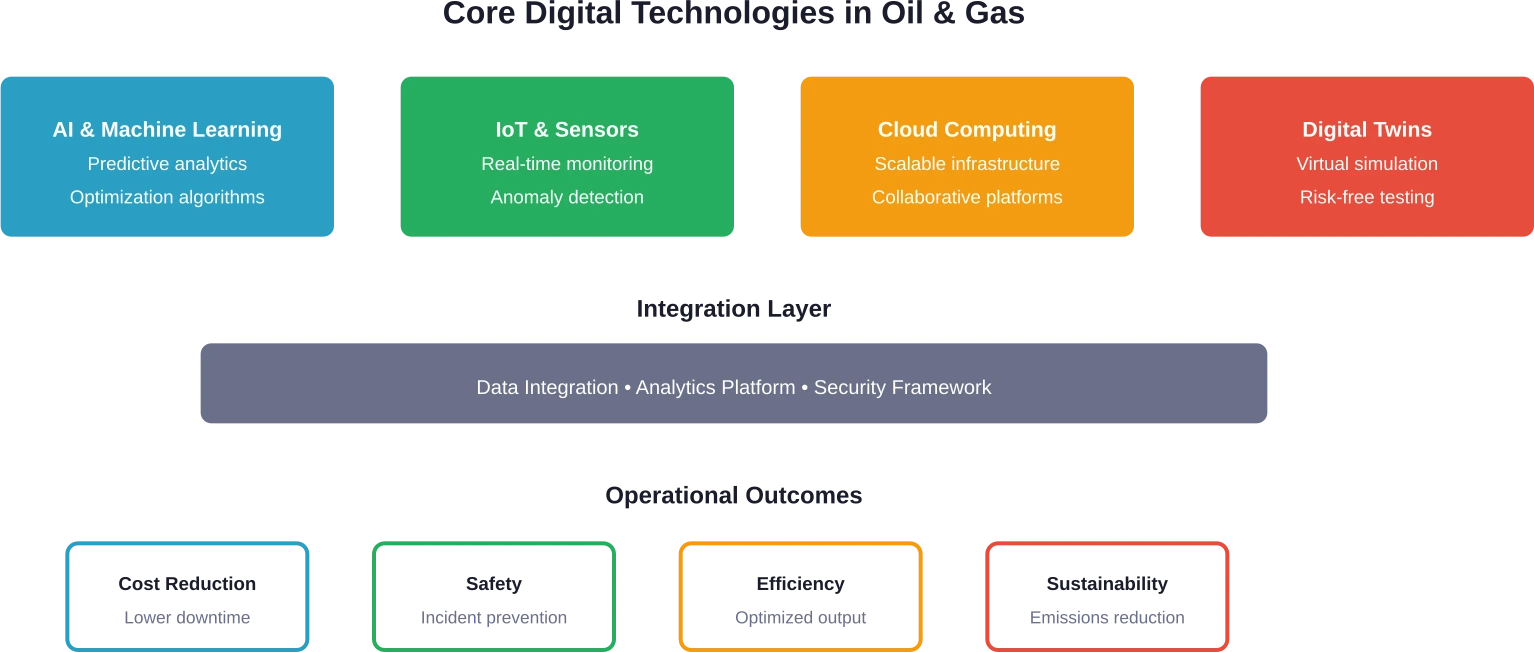
Several technologies form the backbone of digital operations in the energy sector. Each serves distinct functions, but their real power emerges through integration.
Artificial Intelligence and Machine Learning
AI applications in petroleum operations have expanded dramatically. According to IEA data, the number of supercomputers operated by oil and gas companies ranking among the world's 500 fastest increased from 11 in 2000 to 24 by 2024, with total computing capacity growing at almost 70% annually. This expansion outpaces the broader supercomputing industry.
Real applications include:
- Seismic data interpretation and reservoir modeling
- Predictive equipment maintenance to prevent failures
- Production optimization across multiple wells
- Supply chain and logistics optimization
- Safety monitoring and incident prediction
Shell's collaboration with SparkCognition (now Avathon) demonstrates the quantifiable impact. Deep-learning models predicted optimal seismic shots, reducing total required shots by approximately 99%. A 9-month offshore seismic program was dramatically compressed, saving substantial time and resources.
That's not incremental improvement. That's transformation.
Internet of Things and Sensor Networks
IoT devices enable continuous monitoring of equipment, pipelines, and environmental conditions. Thousands of sensors across facilities generate real-time data streams that feed analytical systems.
These networks detect anomalies, track performance metrics, and provide visibility into remote operations. When integrated with AI, they enable autonomous responses to changing conditions.
Cloud Computing and Edge Processing
Cloud platforms provide the computational infrastructure for processing massive datasets. They enable collaboration across geographically dispersed teams and facilitate access to advanced analytical tools without massive capital investments in on-premise infrastructure.
Edge computing complements cloud systems by processing time-sensitive data locally. This reduces latency for critical operations where milliseconds matter.
Digital Twins and Simulation
Digital twins create virtual replicas of physical assets—wells, refineries, pipelines. Engineers can test scenarios, optimize parameters, and predict outcomes before implementing changes in the real world.
This technology reduces risk while accelerating innovation. Why experiment on a billion-dollar facility when simulation can identify the optimal approach first?
Measurable Benefits Across Operations
The business case for digital transformation rests on quantifiable improvements. Abstract promises don't justify multi-million dollar investments. Hard numbers do.
Operational Efficiency Gains
Advanced analytics enable upstream companies to optimize production in ways previously impossible. According to McKinsey research cited in industry publications, companies using advanced analytics see significant productivity improvements.
According to Prosci research on digital transformation in oil and gas, some organizations have achieved a 145% improvement in processing speeds on key projects. That's more than doubling efficiency through change management and technology adoption working in tandem.
Cost Control in Uncertain Markets
Deloitte's 2026 Oil and Gas Industry Outlook emphasizes that companies view spending on digital transformation as a driver of efficiency, even amid policy and tariff uncertainty. This perspective reflects a strategic shift—digital isn't discretionary spending. It's essential infrastructure.
According to Deloitte's 2026 Oil and Gas Industry Outlook, materials and service costs in the value chain have increased between 4% and 40% due to tariff-related pressures. Digital optimization helps offset these cost pressures through improved resource utilization and waste reduction.
Safety and Risk Reduction
Predictive maintenance systems identify equipment failures before they occur. This prevents catastrophic incidents, protects personnel, and avoids expensive emergency repairs.
Real-time monitoring detects hazardous conditions—gas leaks, pressure anomalies, structural stress—enabling rapid response. Automation removes workers from dangerous environments while maintaining operational continuity.
Environmental Performance
Digital technologies support sustainability objectives through multiple mechanisms. Precise monitoring reduces methane emissions from leaks. Optimized operations lower energy consumption. Better logistics planning cuts transportation-related emissions.
The International Energy Agency notes that digital technologies can improve efficiency in end-use sectors while also enabling shifts to low-carbon options. This dual benefit addresses both operational and strategic environmental goals.
|
Benefit Category |
Primary Technologies |
Typical Impact |
|---|---|---|
|
Production Optimization |
AI, Digital Twins, Analytics |
10-30% throughput improvement |
|
Maintenance Costs |
IoT, Predictive Analytics |
20-40% reduction in downtime |
|
Safety Incidents |
Real-time Monitoring, Automation |
30-50% fewer incidents |
|
Energy Efficiency |
Process Optimization, Smart Systems |
5-15% energy savings |
|
Decision Speed |
Cloud Platforms, Collaboration Tools |
50-200% faster analysis |

Know What You’re Building Before You Invest in Oil and Gas Tech
Digital transformation in oil and gas often involves scattered systems - field data, asset management, logistics, reporting. The problem is not lack of tools, it is lack of structure before development starts.
OSKI Solutions helps teams define that structure early. They break down operations into clear technical requirements, plan how systems should connect, and outline what needs to be built before any development begins. Their work includes custom platforms, integrations, and data-driven systems shaped around real operational workflows.
With OSKI, you can:
- translate field and operational processes into system requirements
- plan integrations across existing and new tools
- understand cost and timeline before committing
If you need clarity before building your system - start with OSKI Solutions.
Transform Oil and Gas with Digital Innovation
Optimize operations with advanced digital solutions for the oil and gas industry. From asset monitoring and predictive maintenance to data analytics and automation, we help companies improve efficiency, safety, and decision-making.
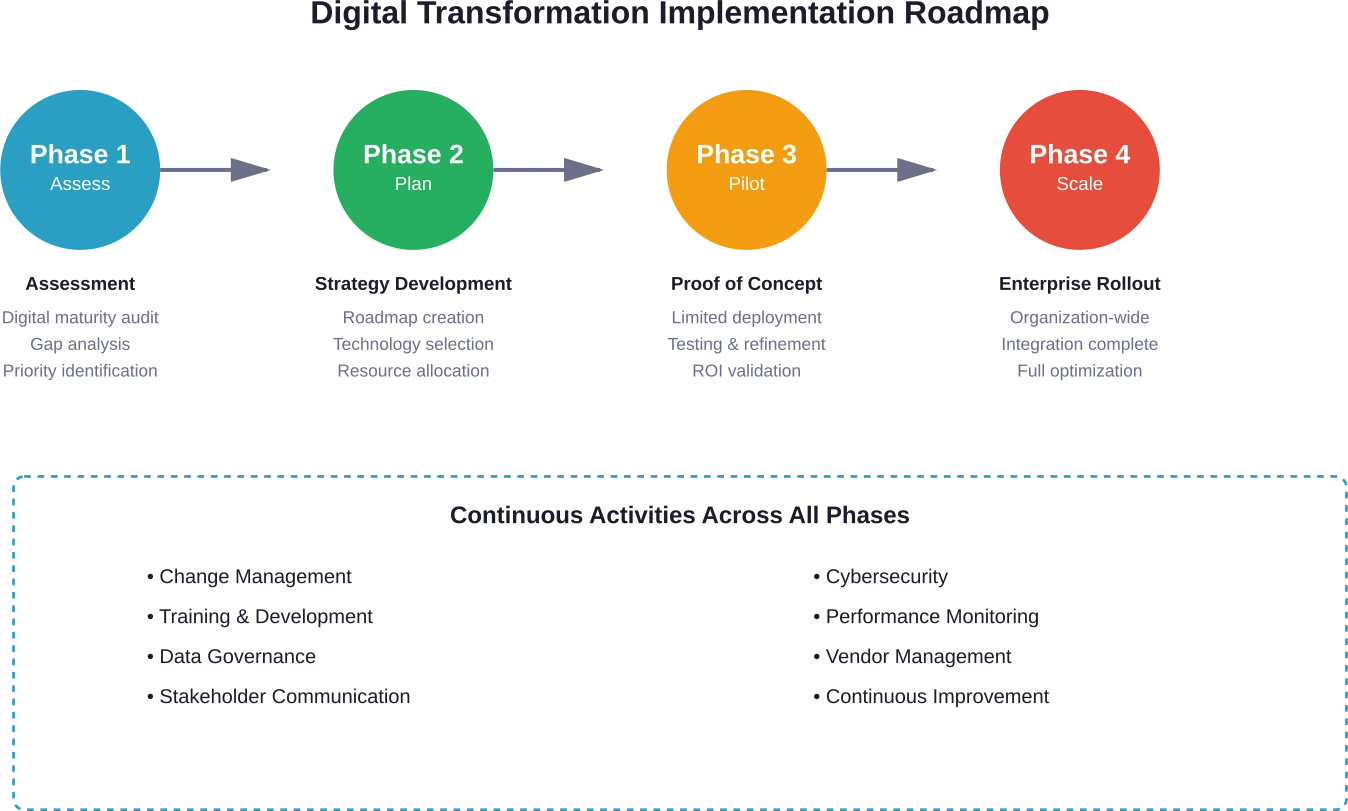
Implementation Roadmap and Best Practices
Technology alone doesn't guarantee success. Implementation strategy determines whether digital initiatives deliver value or become expensive failures.
Start with Assessment, Not Technology
Before selecting platforms or vendors, organizations need clear understanding of current digital maturity. Where are the biggest gaps? Which processes offer the highest return on investment?
Assessment frameworks help identify priority areas and establish baseline metrics. This foundation enables measurement of transformation progress and ROI calculation.
Pilot Before Scaling
Large-scale rollouts carry substantial risk. Pilot projects on specific assets or processes prove concepts, identify challenges, and build internal expertise before committing major resources.
Successful pilots create internal champions who can drive broader adoption. Failed pilots caught early prevent organization-wide disruption.
Integrate Change Management
Technology implementation without cultural change fails. Period.
Research on digital transformation in the petroleum sector emphasizes that companies must address employee engagement and communication throughout the process. Workforce resistance can derail technically sound initiatives.
Change management practices include:
- Clear communication about transformation objectives and benefits
- Training programs that build digital skills across all levels
- Involvement of frontline workers in design and testing
- Recognition systems that reward adoption and innovation
- Leadership modeling of new behaviors and approaches
Focus on Data Quality and Integration
Advanced analytics require high-quality data. Garbage in, garbage out remains true regardless of AI sophistication.
Organizations must establish data governance frameworks, standardize formats, and ensure integration across legacy systems. This foundational work isn't glamorous, but it's essential.
Build or Partner for Capabilities
Some companies develop internal digital capabilities. Others partner with technology providers. Most pursue a hybrid approach.
The key question: where does proprietary advantage lie? Core operational knowledge typically stays in-house. Specialized technical capabilities may come from partners who maintain cutting-edge expertise.
Workforce Transformation and Skills Development
Digital transformation fundamentally changes what workers do and what skills they need. This creates both challenges and opportunities.
The Augmentation Approach
As emphasized in the Journal of Petroleum Technology (SPE's flagship publication), AI isn't replacing human expertise—it's amplifying it. The companies that master this balance will define the sector's future in a rapidly evolving energy landscape.
Experienced engineers bring domain knowledge that algorithms can't replicate. But augmented with AI-driven insights, these professionals make better decisions faster. The combination outperforms either alone.
Emerging Skill Requirements
The workforce needs new capabilities:
- Data literacy across all roles, not just specialists
- Comfort with AI-assisted decision-making tools
- Cross-functional collaboration in integrated digital environments
- Adaptability as technologies and processes evolve
- Cybersecurity awareness to protect digital infrastructure
Organizations face a choice: retrain existing workers or recruit new talent with digital skills. Most need both. The key is balancing technical capabilities with domain expertise.
Cultural Shift Toward Agility
Digital operations require different organizational cultures. Traditional hierarchical structures slow down in environments requiring rapid iteration and continuous improvement.
Leading companies are fostering agility through flatter structures, cross-functional teams, and empowerment of frontline decision-makers equipped with real-time data.
Navigating Implementation Challenges
Digital transformation initiatives face predictable obstacles. Anticipating them enables proactive mitigation.
Legacy System Integration
Oil and gas companies operate infrastructure spanning decades. New digital systems must integrate with legacy equipment and software that weren't designed for connectivity.
This technical challenge requires careful architecture planning, middleware solutions, and sometimes custom integration work. It's rarely simple plug-and-play.
Cybersecurity Risks
Connected systems create new attack surfaces. Operational technology environments that were previously air-gapped now connect to networks—and potentially to threats.
Robust cybersecurity frameworks must protect critical infrastructure while enabling the connectivity that digital operations require. This balance demands ongoing attention and investment.
Organizational Resistance
People resist change, especially when it affects established workflows and job security. Middle management may feel threatened by automation. Frontline workers might distrust new systems.
Overcoming resistance requires transparent communication about transformation objectives, involvement of affected employees in design processes, and visible commitment from leadership.
Budget Constraints and ROI Pressure
Digital transformation requires significant capital investment during periods when companies face cost pressures. According to Deloitte's 2026 Oil and Gas Industry Outlook cited in the November 9, 2025 Journal of Petroleum Technology article, tariff-related cost increases are affecting supply chains across the sector.
This environment demands clear business cases with realistic ROI timelines. Quick wins that demonstrate value help maintain momentum for longer-term initiatives.
The Agentic Oil Field Vision
Where is all this heading? Industry thought leaders describe an "agentic oil field" where AI systems don't just analyze—they reason, act, and optimize autonomously.
According to a March 2026 Journal of Petroleum Technology guest editorial titled 'The Agentic Oil Field—No Longer a Vision, It Is Inevitable,' this vision reaches further than dashboards and data lakes. It envisions artificial intelligence systems that operate with increasing autonomy while maintaining human oversight on critical decisions.
What does this look like in practice?
Autonomous drilling systems that adjust parameters in real-time based on formation characteristics. Production optimization algorithms that balance output across hundreds of wells simultaneously. Predictive maintenance systems that automatically schedule repairs and order parts before failures occur.
This isn't science fiction. The technologies exist. The challenge is integration, validation, and building trust in autonomous systems managing critical infrastructure.
Environmental Impact and Sustainability
Digital transformation serves strategic environmental objectives beyond operational efficiency. The energy transition demands that oil and gas companies reduce their carbon footprint while meeting global energy needs.
Digital technologies enable this balance through:
- Precise emissions monitoring and leak detection
- Optimization reducing energy waste and flaring
- Better integration with renewable energy sources
- Enhanced efficiency reducing per-barrel carbon intensity
- Transparent reporting to stakeholders and regulators
The International Energy Agency emphasizes that digitalisation can help improve safety, productivity, accessibility, and sustainability of energy systems globally. But it also raises new security and privacy risks that require careful management.
|
Challenge Area |
Digital Solutions |
Implementation Considerations |
|---|---|---|
|
Legacy Systems |
API integration layers, middleware platforms |
Gradual migration, maintain operational continuity |
|
Cybersecurity |
Zero-trust architecture, continuous monitoring |
Balance security with usability, regular updates |
|
Workforce Skills |
Training programs, hiring strategies |
Combine upskilling with strategic recruitment |
|
Data Quality |
Governance frameworks, standardization |
Establish clear ownership and accountability |
|
Cultural Resistance |
Change management, leadership alignment |
Communication, involvement, early wins |
Industry Standards and Frameworks
The American Petroleum Institute develops standards that shape industry practices. While API hasn't published comprehensive digital transformation standards yet, existing frameworks cover aspects like data management, cybersecurity for operational technology, and safety systems.
Organizations implementing digital initiatives should align with relevant API standards to ensure compatibility, safety, and industry acceptance. This becomes particularly important when digital systems interface with safety-critical operations.
Standard frameworks also facilitate vendor interoperability. When multiple technology providers adhere to common standards, integration complexity decreases and organizations avoid vendor lock-in.
Looking Ahead: 2026 and Beyond
The trajectory is clear. Digital transformation isn't a temporary trend—it's the new operational baseline for competitive oil and gas companies.
Several factors will accelerate adoption:
Economic pressure: Volatile markets demand operational efficiency. Digital optimization provides measurable cost advantages.
Talent dynamics: Younger workers expect digital tools. Companies offering modern technology platforms attract better talent.
Regulatory evolution: Governments increasingly require detailed environmental reporting. Digital monitoring systems provide the data needed for compliance.
Competitive dynamics: As leaders demonstrate quantifiable benefits, laggards face increasing pressure to catch up or risk obsolescence.
The companies that thrive won't be those with the most technology. They'll be those that most effectively integrate digital capabilities with human expertise, creating organizations that are simultaneously more efficient and more innovative.
That's the real transformation—not just in systems, but in how energy companies operate at a fundamental level.
Frequently Asked Questions
What is digital transformation in the oil and gas industry?
Digital transformation in oil and gas refers to the strategic integration of advanced technologies—AI, IoT, cloud computing, analytics—across exploration, production, refining, and distribution operations. It goes beyond implementing new software to fundamentally changing how companies operate, make decisions, and create value through data-driven processes and automated systems.
What are the main benefits of digital transformation for oil and gas companies?
The primary benefits include operational efficiency improvements of 10-30%, maintenance cost reductions of 20-40% through predictive analytics, enhanced safety with 30-50% fewer incidents, energy efficiency gains of 5-15%, and significantly faster decision-making. Companies also see improved environmental performance through better emissions monitoring and optimized resource utilization.
How much does digital transformation cost for oil and gas operations?
Investment requirements vary widely based on company size, current digital maturity, and transformation scope. Projects can range from hundreds of thousands for pilot programs to hundreds of millions for enterprise-wide implementations. Industry data shows companies view this spending as essential for efficiency and competitiveness, even during periods of economic uncertainty and cost pressure.
What are the biggest challenges in implementing digital transformation?
The most significant obstacles include integrating new systems with decades-old legacy infrastructure, managing cybersecurity risks in newly-connected operational technology environments, overcoming organizational resistance to change, addressing workforce skill gaps, and maintaining data quality across disparate systems. Cultural challenges often prove more difficult than technical ones.
How does AI specifically help oil and gas operations?
AI applications include seismic data interpretation that can reduce required shots by up to 99%, predictive maintenance preventing equipment failures, production optimization across multiple wells simultaneously, supply chain and logistics optimization, and safety monitoring with incident prediction. According to IEA data, oil and gas companies' supercomputing capacity has grown at nearly 70% annually to support these applications.
Will digital transformation eliminate jobs in the oil and gas sector?
The industry perspective, as emphasized in the Journal of Petroleum Technology, focuses on augmentation rather than replacement. AI amplifies human expertise rather than replacing it. While some routine tasks become automated, new roles emerge requiring data analysis, system management, and strategic decision-making. Successful companies retrain existing workers while recruiting for new digital skills.
How long does digital transformation take in the oil and gas industry?
Transformation is an ongoing journey rather than a one-time project. Pilot programs typically run 3-12 months, while enterprise-wide implementations unfold over 3-5 years or more. The pace depends on organizational size, existing infrastructure, cultural readiness, and investment levels. Quick wins in specific areas can demonstrate value within months, building momentum for longer-term initiatives.
Conclusion
Digital transformation represents the most significant operational shift in the oil and gas industry since the advent of modern drilling technology. It's not a choice between maintaining traditional expertise or adopting new technology—success requires both.
The data is compelling. Companies implementing AI-driven analytics see dramatic efficiency improvements. Predictive maintenance systems cut downtime by double-digit percentages. Real-time optimization increases production while reducing environmental impact.
But technology alone doesn't deliver these results. Successful transformation requires strategic planning, change management, workforce development, and cultural evolution. Organizations must address legacy systems, cybersecurity risks, and organizational resistance while maintaining operational continuity.
The path forward involves augmentation—combining human expertise with digital capabilities to create operations that are smarter, safer, and more sustainable. Those who master this balance won't just survive the energy transition. They'll lead it.
Ready to start your digital transformation journey? Begin with an honest assessment of current capabilities, identify high-value pilot opportunities, and build a roadmap that aligns technology investments with strategic business objectives. The companies reshaping this industry aren't waiting for perfect solutions—they're learning by doing, iterating based on results, and building competitive advantage through continuous digital evolution.


